
Free printable shooting targets as PDFs, sized for both Letter and A4 paper — nothing to sign up for and nothing to pay.
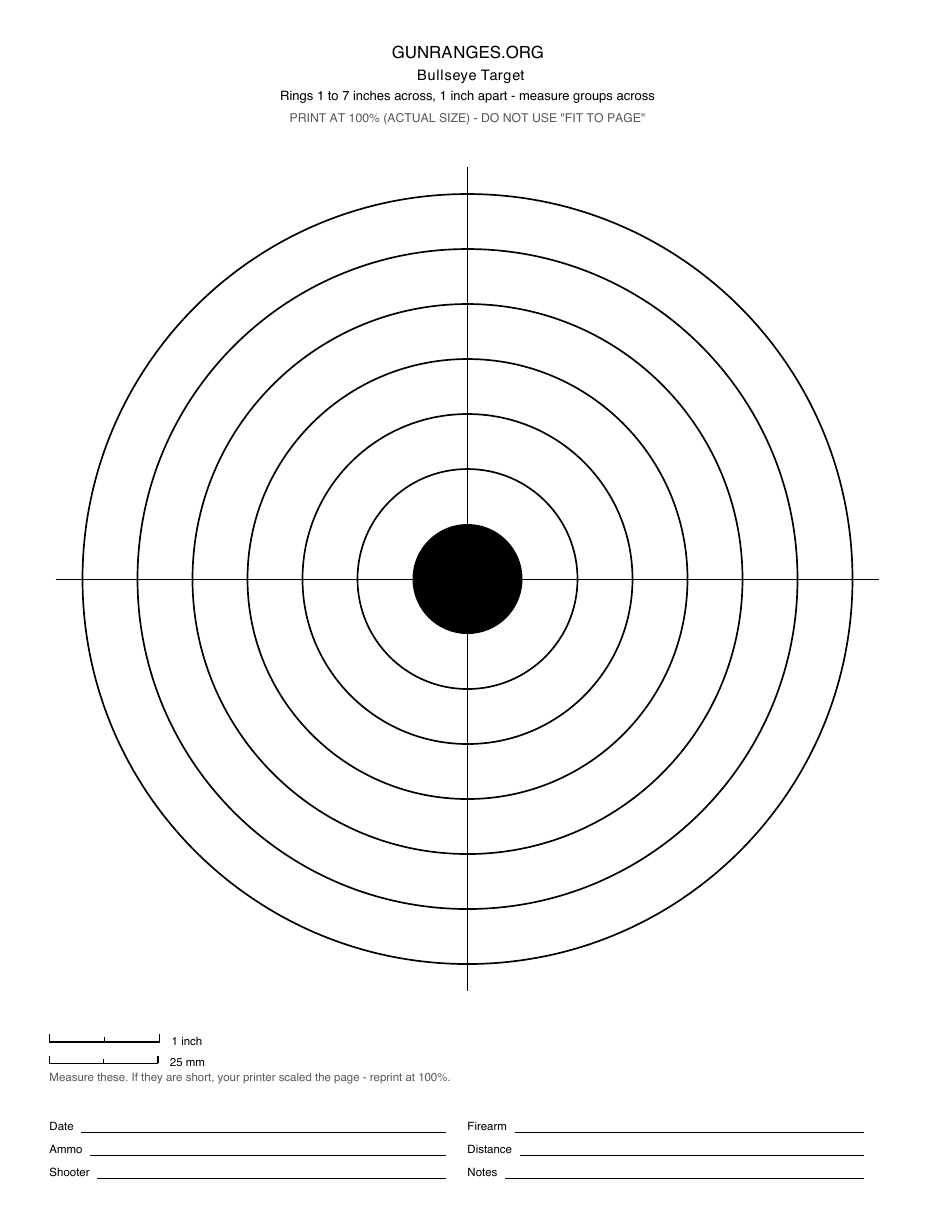 Bullseye
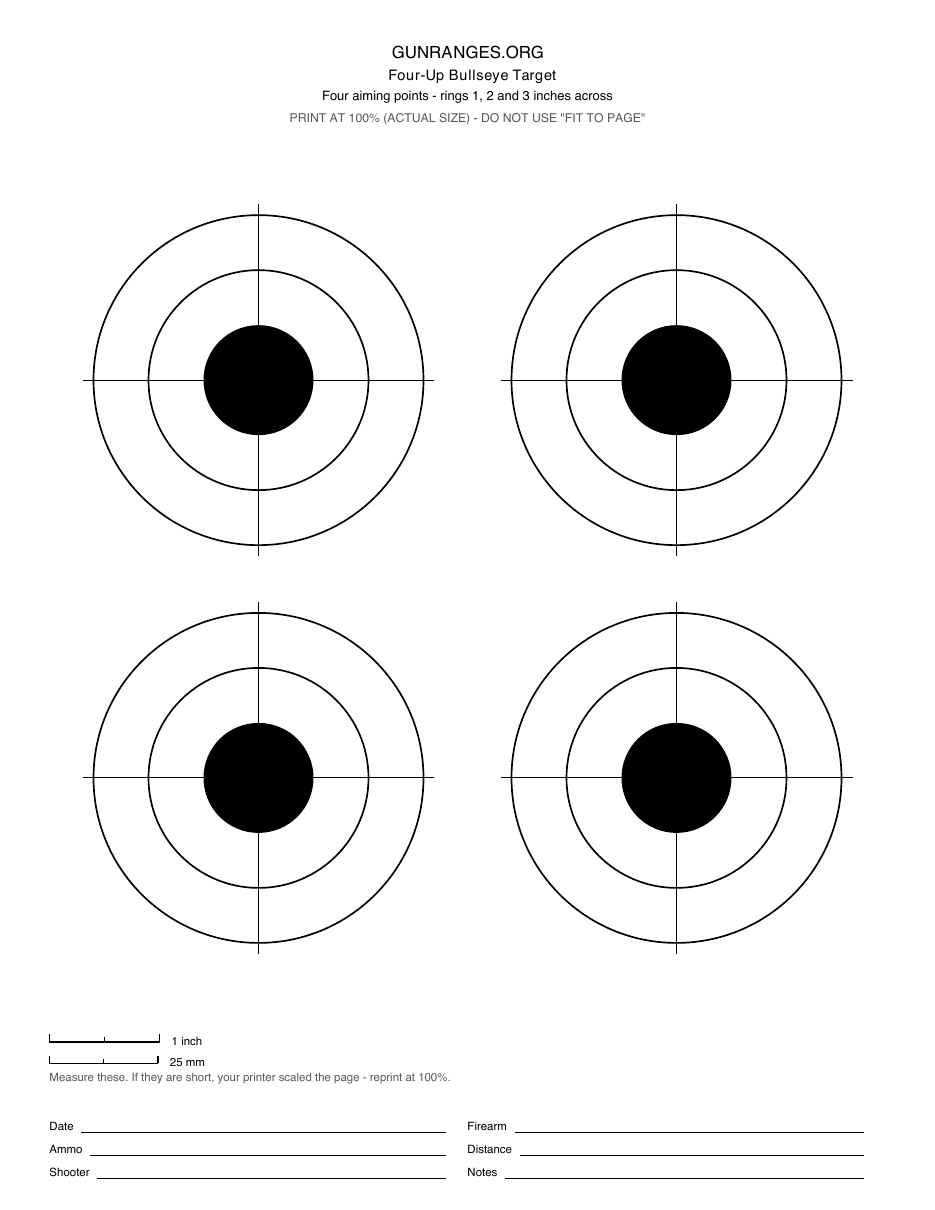 Four-up
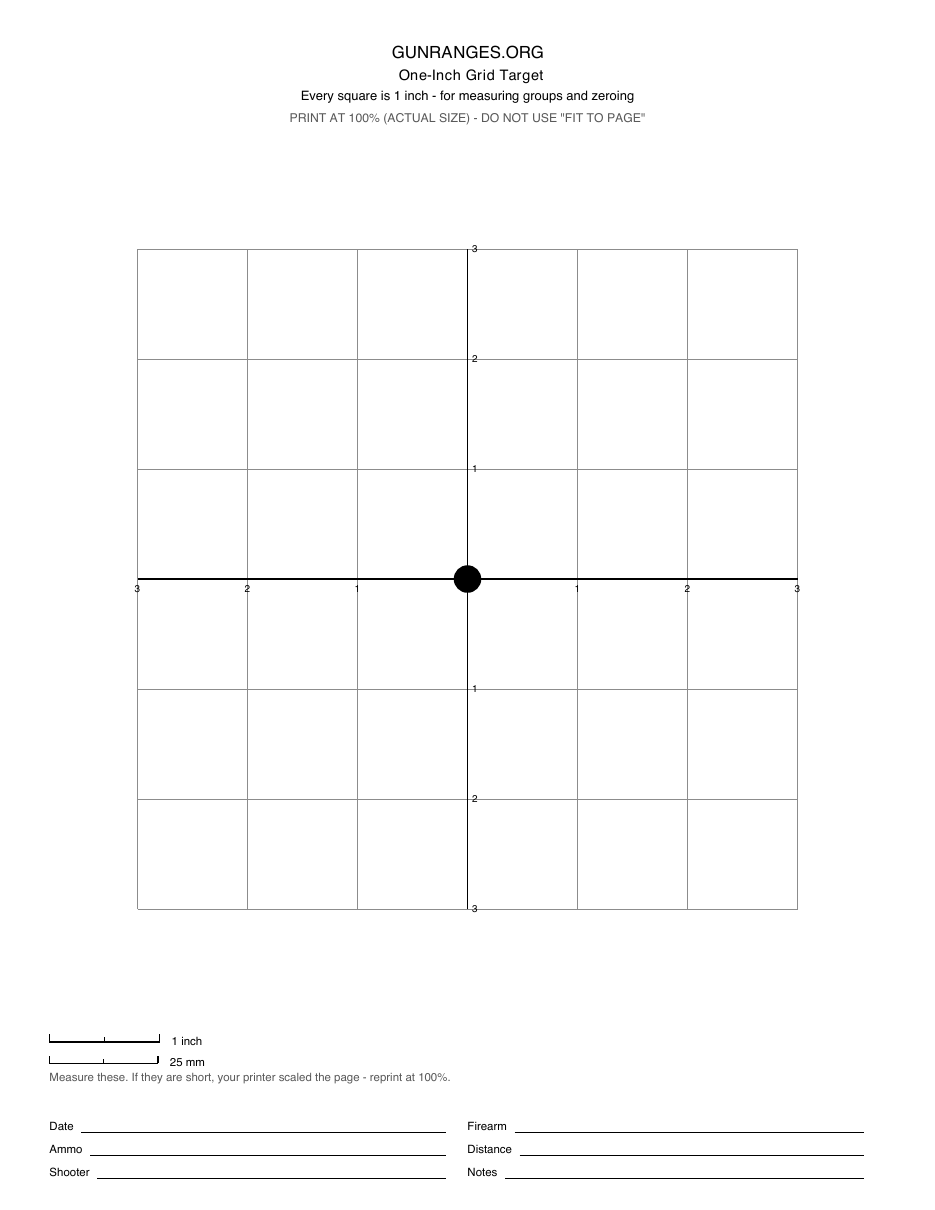 1-inch grid
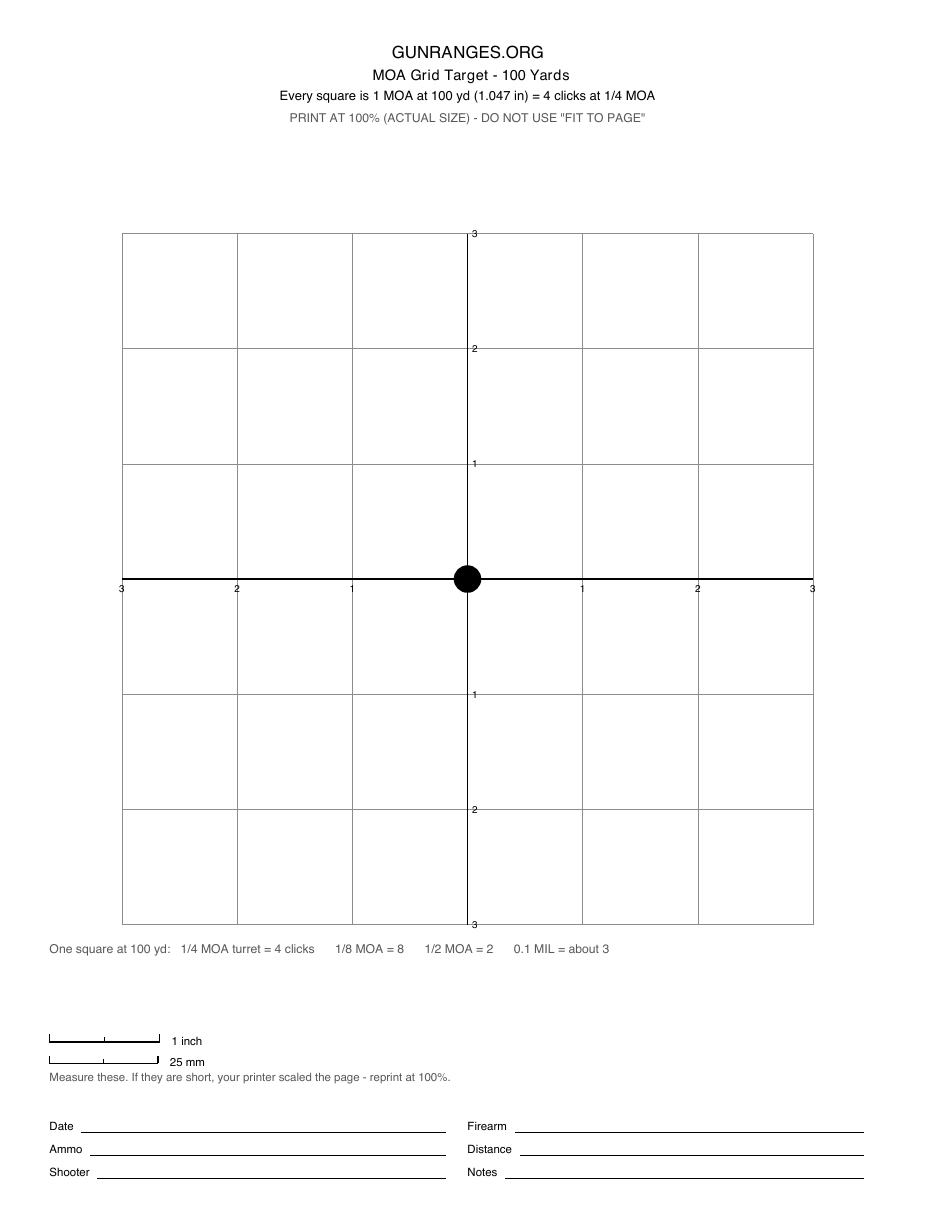 MOA grid
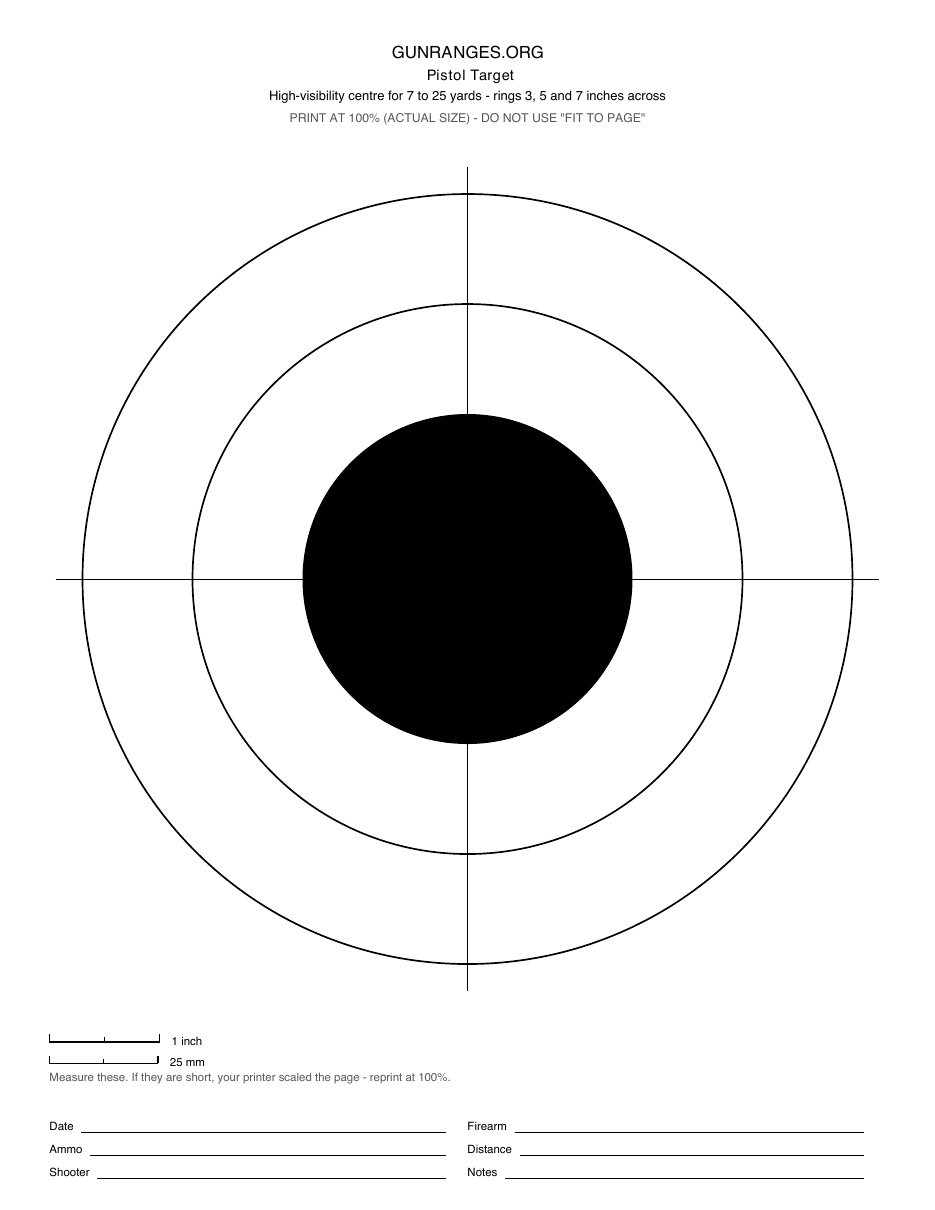 Pistol
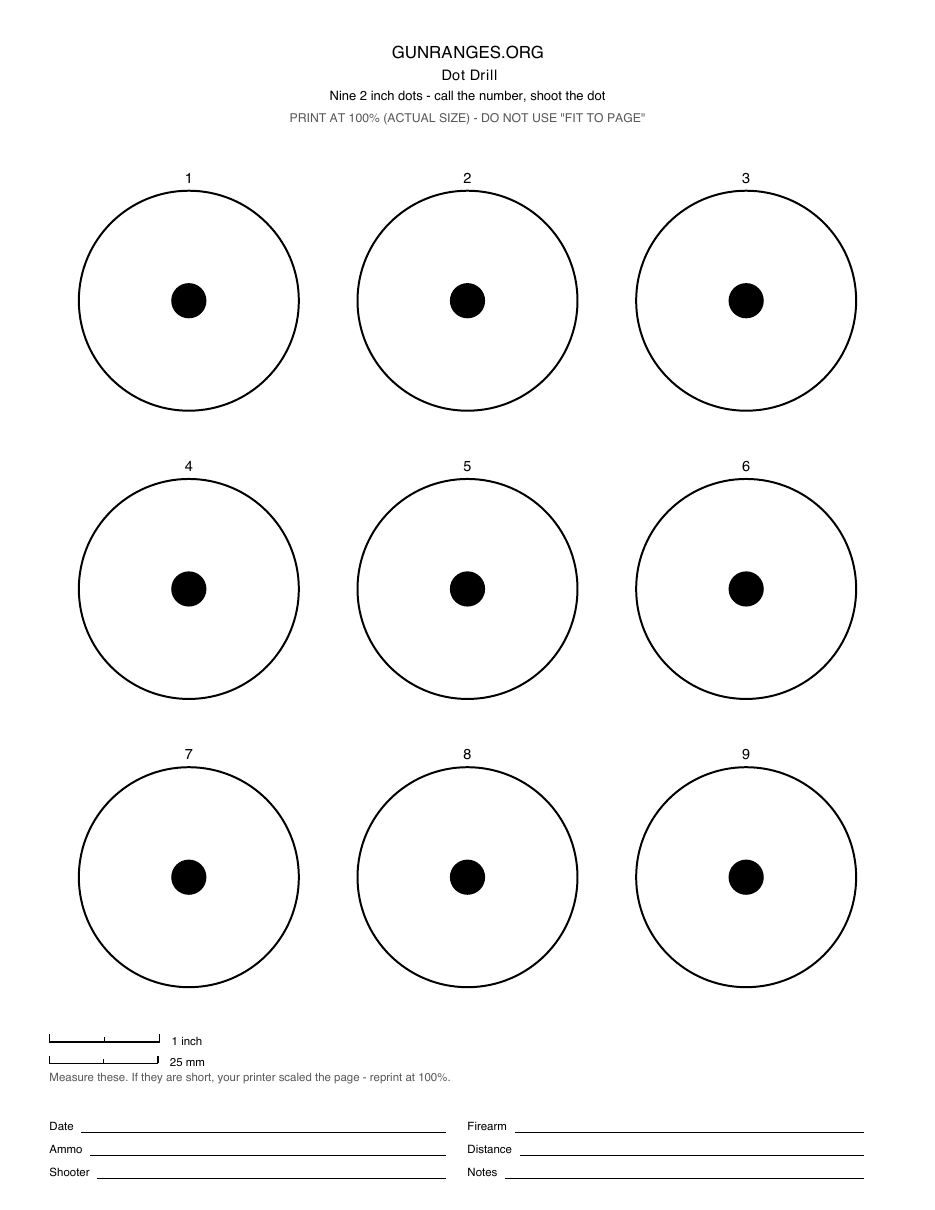 Dot drill
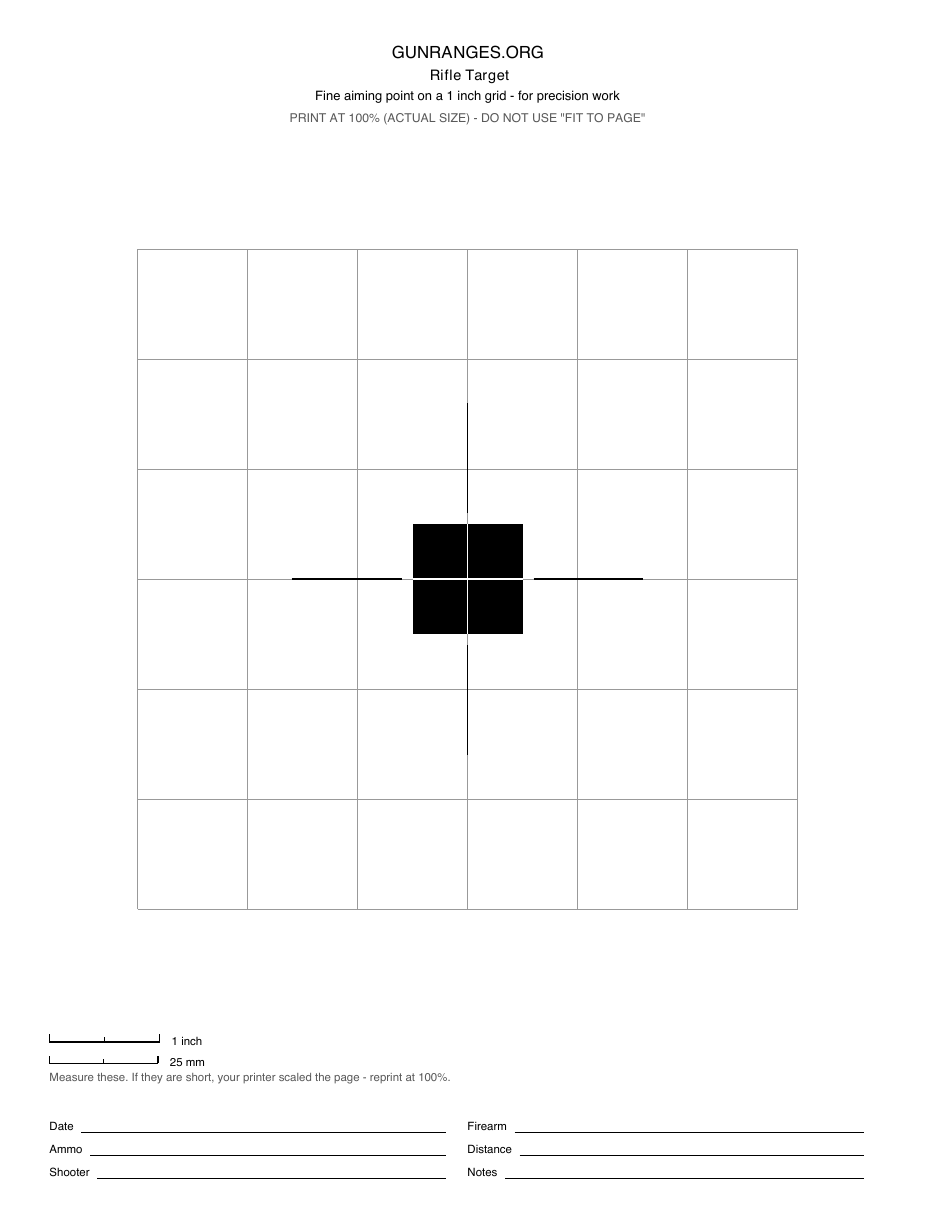 Rifle
Rifle
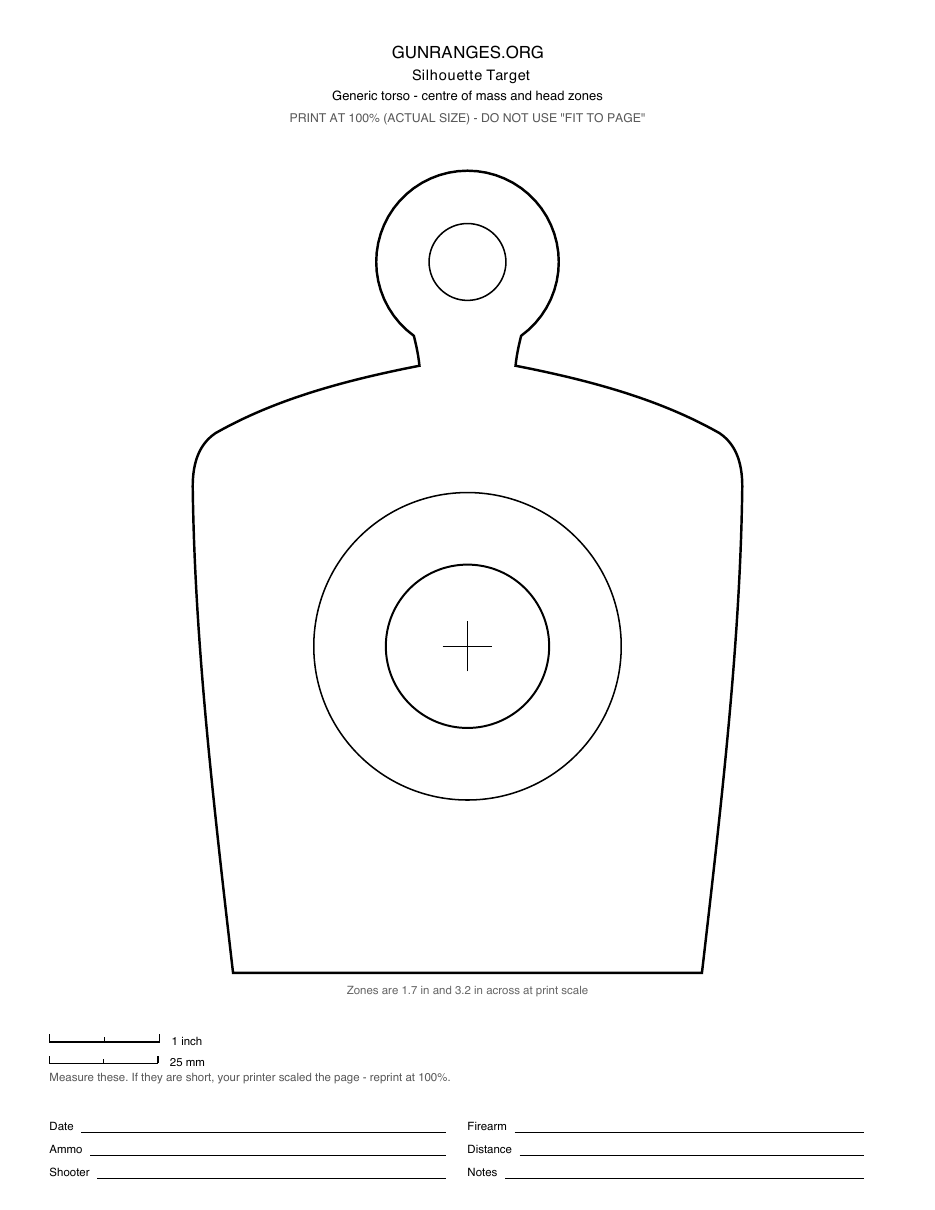 Silhouette
 Shotgun patterning
Printable bullseye targets
The general-purpose target, and the one to reach for if you are not sure which you want. Rings run from 1 to 7 inches across in one-inch steps, so you can measure a group off the sheet without a caliper. The four-up sheet puts four smaller aiming points on one page, which is useful when you are shooting strings and want each one recorded separately rather than overlapping in the same bull.
Bullseye Target
Rings 1 to 7 inches across
Four-Up Bullseye
Four aiming points, 1 to 3 inches
Sight-in and zeroing targets
Grid targets for adjusting a scope. Count the squares from your group to the point of aim and you have the correction, in the same units your turrets are marked in.
The one-inch grid works at any distance. The MOA grid is scaled so that one square is one minute of angle at 100 yards — 1.047 inches, not a flat inch — which is four clicks on a quarter-MOA turret. Both carry the click conversions printed on the sheet, so you are not doing arithmetic at the bench.
One-Inch Grid
Every square is 1 inch
MOA Grid, 100 Yards
1 square = 1 MOA = 4 clicks at 1/4 MOA
Printable pistol targets
Larger aiming points for handgun work between 7 and 25 yards, where a fine rifle bull simply disappears against iron sights.
The dot drill is nine two-inch dots. Call a number, shoot that dot — it turns a slow-fire session into something you can actually score, and it shows up a flinch far faster than a single bull does.
Pistol Target
Rings 3, 5 and 7 inches across
Dot Drill
Nine 2 inch dots
Printable rifle targets
A one-inch aiming square with a white crosshair through it, sitting on a one-inch grid. The square is deliberate: at magnification a reticle centres against corners far more precisely than it does against the edge of a round bull, where there is nothing to line up on.
Rifle Target
1 inch aiming square on a 1 inch grid
Printable silhouette targets
A plain torso outline with a centre-of-mass zone and a head zone, at 1.7 and 3.2 inches across.
Worth knowing before you drive out: some ranges do not permit humanoid targets at all, and others restrict them to particular bays. Check the range’s own rules first.
Silhouette Target
Centre-of-mass and head zones
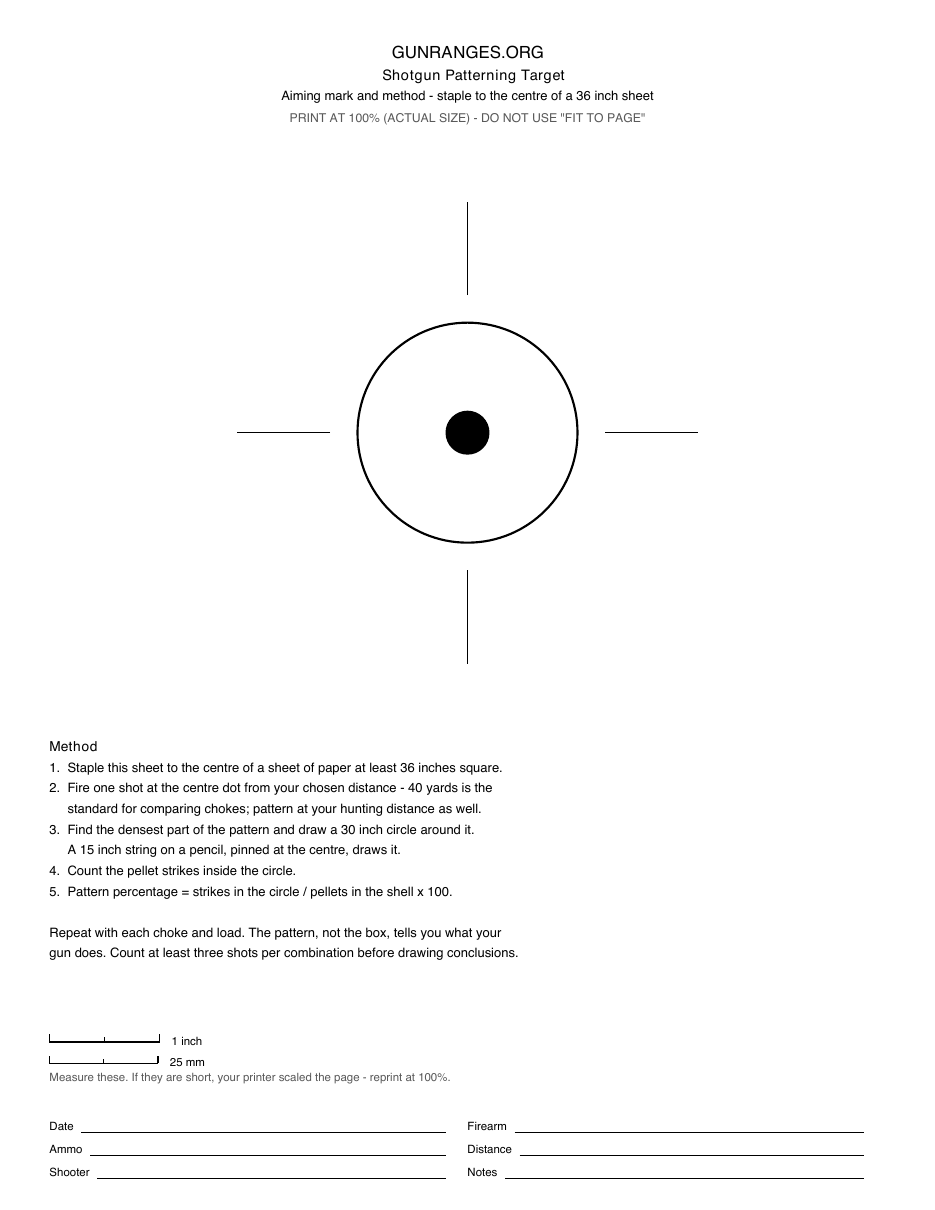
Shotgun patterning target
Patterning is how you find out what your gun, choke and load actually do, as opposed to what the box says. It is the single most useful hour a shotgun shooter can spend, and almost nobody does it.
This sheet is the aiming mark and the method. Staple it to the centre of a large sheet of paper — a proper pattern is counted inside a 30-inch circle, and no home printer makes one of those. A sheet that claimed to be a scaled 30-inch circle would give you a pattern percentage that was wrong and looked right.
Shotgun Patterning Target
Aiming mark and method
How to print these at the right size
Nearly every printer offers to fit a page to the paper, and most do it unless told otherwise. That shrinks the sheet by three to five percent, so the rings and grid squares are no longer the size they say they are — and nothing on the printed page tells you it happened. On a grid target, where the whole point is measuring, that quietly makes every measurement wrong.
- Download the PDF. Do not print the preview image from this page.
- In the print dialog set the scale to 100% or Actual size,
and turn off “Fit to page”, “Shrink oversize pages”
and “Scale to fit”.
Chrome: More settings → Scale → Custom → 100.
Preview on a Mac: Scale: 100%.
Adobe Acrobat Reader: Page Sizing & Handling → Actual size. - Measure the calibration bar at the bottom of the printed sheet against a ruler. One inch should be one inch and 25 mm should be 25 mm. If it is short, the print scaled — fix the setting and print again.
What to print them on
Plain copier paper is fine for close work and it is what most people use. Past about 25 yards, or outdoors in any wind, heavier stock — 65 to 110 lb card — holds its shape, tears less at the shot and survives being pinned up and taken down again. If you are patterning a shotgun you want the largest paper you can find, and butcher paper or the back of a roll of gift wrap both work.
Where to shoot them
Most ranges are happy for you to bring your own paper targets, though a few sell their own and ask that you use those, and some restrict target types on particular bays. Find a range near you and check its listing before you set out.